

Most kitchens have a drawer of cloths that seem to do everything badly.
1. Why Kitchen Cloths Fail in Real Use
The usual cause is not poor quality. It is using one cloth for several jobs.
The second cause is care. Fabric softener, overloaded machines and storing cloths while still damp quietly destroy absorbency and create odors.
The collection of Kitchen & Dining Linens covers the full range, so it helps to understand each category before you choose.
2. Know the Role of Each Linen
Every textile in a kitchen has one primary task. Naming the task makes buying decisions simple.
- Dish towels: drying washed dishes, glassware and hands. They need absorbency and low lint.
- Dishcloths: washing and wiping surfaces. They need to be rough enough to lift residue and quick to dry.
- Oven mitts and pot holders: protection from heat. They need thickness and a firm grip, not softness.
- Aprons: protecting clothes from splashes. They need coverage and easy washing.
- Table linens: placemats, runners, tablecloths and napkins for dining. They need stain resistance and a good look.
Keeping these roles separate is the single most useful change a home cook can make. Mixing them is how towels end up greasy and mitts end up soaked.
3. Fiber and Weave: What Changes the Result
Two cloths can look alike and behave very differently. Fiber type and weave decide absorbency, drying speed and how much lint is left on glass.
Common fibers
Cotton is absorbent, durable and easy to wash at high temperatures. It is the standard choice for towels and dishcloths. Linen dries quickly and leaves very little lint, which suits glassware. Polyester and blends resist wrinkles and stains, making them common in table linens, though they absorb less water. Microfiber picks up moisture and fine dust well but can hold onto grease and should be laundered separately.
Common weaves
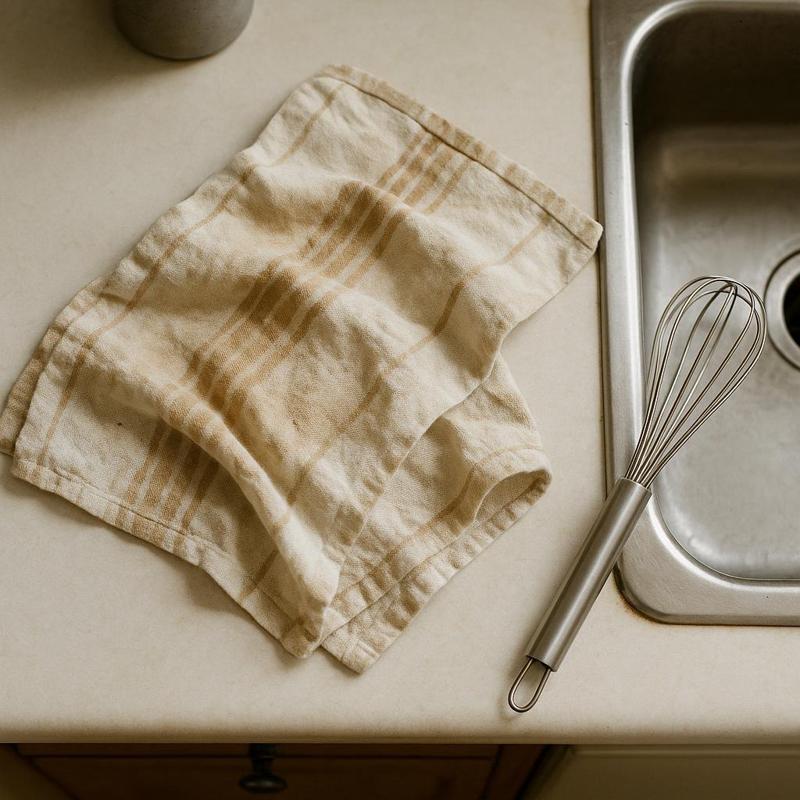
Terry has raised loops that hold water, which is ideal for general drying. Waffle weave has a honeycomb texture that dries fast and scrubs lightly.
If a cloth leaves lint on glasses, the weave is usually too loose or too new. Washing it a few times before first use often solves the problem.
4. Matching Linens to Tasks at a Glance
| Task | Best fabric | Best weave | Main thing to check |
|---|---|---|---|
| Drying dishes | Cotton | Terry or waffle | Absorbency |
| Polishing glassware | Linen or tight cotton | Flat weave | Low lint |
| Wiping counters | Cotton or blend | Waffle | Quick drying |
| Handling hot pans | Thick cotton, silicone-lined | Quilted | Thickness and grip |
| Everyday meals | Cotton blend or polyester | Tight weave | Stain resistance |
| Dinner parties | Cotton or linen | Flat weave | Drape and finish |
Use this as a starting point rather than a rule. A well-made cotton towel can handle several jobs, as long as it is not asked to do all of them in the same day.
5. How Many You Actually Need
A single towel is never enough. Cloths need time to dry between uses, and a damp cloth is where odors begin.
- Four to six dish towels, with a fresh one out each day.
- Four to six dishcloths, replaced daily or every other day.
- Two oven mitts or pot holders, kept dry and away from the sink.
- One or two aprons, so there is always a clean one.
- Enough placemats or napkins for every seat, plus a few spares.
Buying in sets also keeps colors consistent, which makes it easy to assign colors to jobs, such as one shade for hands and another for surfaces.
6. Washing and Drying Kitchen Linens Properly
Care is where most cloths lose their performance. A few steps keep fibers absorbent for years.
Do
- Wash kitchen cloths separately from clothing and bath towels to avoid cross-contamination and lint.
- Use warm or hot water as the fabric label allows, with a normal detergent dose.
- Leave room in the drum so water and detergent circulate.
- Dry completely before folding or storing.
Avoid
- Fabric softener and dryer sheets. They coat fibers with a film that repels water, which is why a soft towel can feel useless at drying.
- Overloading. Crowded cloths trap residue and stay slightly damp.
- Bleach on colored or blended fabrics unless the care label allows it.
If towels have already lost absorbency, a wash with hot water and a small amount of white vinegar, followed by a plain rinse, often restores them by removing buildup.
7. Hygiene Habits and Common Mistakes
Damp cloths are comfortable places for bacteria, which is why kitchen linens should be changed more often than most people expect.
- Hang cloths open to dry rather than bunching them over a tap.
- Replace the dishcloth every day or two, and never use it on both dishes and raw meat spills without washing.
- Keep oven mitts dry. Wet fabric conducts heat quickly and can cause burns.
- Wash cloths used for greasy tasks apart from glass towels so oils do not transfer.
- Retire cloths that smell sour after washing, or that have thin spots and holes.
An apron is part of the same system.
8. Setting the Table: Placemats, Runners and Napkins
Table linens have a different job from kitchen cloths. They protect the surface, define each place setting and set the mood of a meal.
For daily meals, wipe-clean or tightly woven placemats save the most effort.
When planning a full table, it helps to look at the wider range of Dining & Entertaining Essentials and the Kitchen Tableware collection so textiles, plates and serveware work together in color and scale. Hosts who plan larger events may also like Party Tableware for informal occasions.
A simple rule works well: match the formality of the linen to the meal, and keep a stain-resistant option on hand for children and busy weeknights.
9. Buying Checklist and Summary
Before choosing any piece, run through these questions:
- What single job is this cloth for? Avoid asking it to do three.
- Does the fiber suit the task: cotton for absorbency, linen for lint-free glass, thick padding for heat?
- Is the weave right: terry for water, waffle for scrubbing, flat for polishing?
- Can it be washed hot and dried completely at home?
- Do you have enough pieces to rotate, so no cloth stays damp?
- Do table pieces suit both everyday meals and occasional entertaining?
To recap: kitchen linens fail when roles are mixed, weaves are ignored and washing habits strip absorbency.
When you are ready to build a set, browse the Kitchen & Dining Linens range, or look around Homivo for other textiles and tools that complete the kitchen.